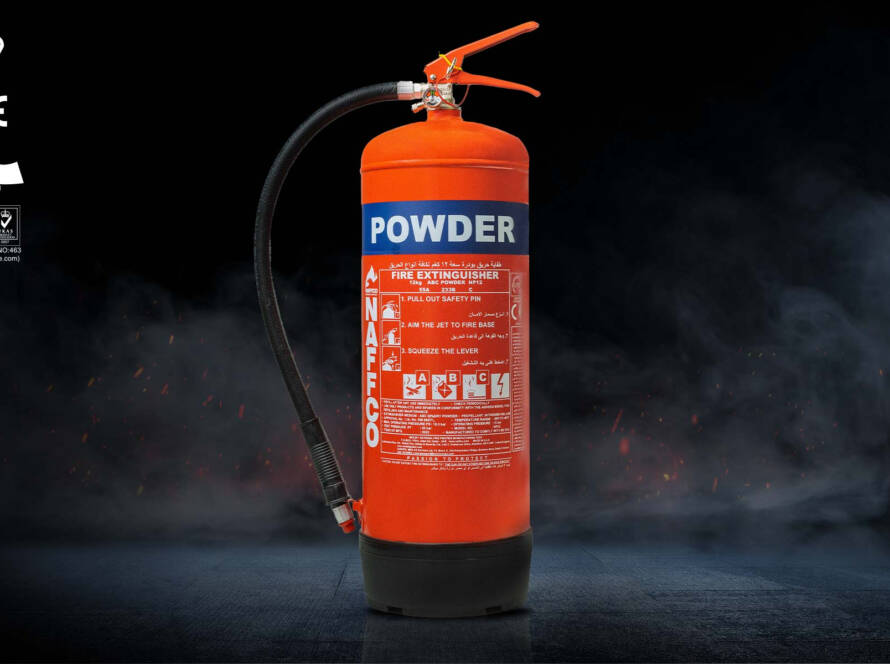
Every year, fires that could have been controlled in seconds turn into major losses simply because the fire extinguisher on-site wasn’t working when it was needed. In Lahore’s factories, offices, restaurants, warehouses, and homes, a fire extinguisher is often the only barrier between a small spark and a serious accident — and that barrier is only as strong as its last refill.
At Fire Titan, we get calls every week from people typing “fire extinguisher refilling near me” or “fire extinguisher refill in Lahore” into Google, usually right after they’ve noticed a low pressure gauge, a caked powder canister, or an extinguisher that’s simply never been serviced since it was installed. This guide walks through everything you need to know about fire extinguisher refilling in Lahore — what it actually involves, how often it should be done, the different extinguisher types, and how to pick a service provider you can actually trust.
What Does Fire Extinguisher Refilling Actually Involve?
Fire extinguisher refilling is the process of restoring a used, expired, or under-pressurized extinguisher back to full working condition. This means replacing the extinguishing agent — dry chemical powder, CO2, foam, wet chemical, or a clean agent like Halotron — and re-pressurizing the cylinder so it discharges correctly and for the full duration it’s rated for.
It is not just “topping up.” A proper refill at Fire Titan includes:
- Visual and internal inspection of the cylinder for corrosion, dents, or weld damage
- Full discharge of any remaining agent in a controlled setting
- Cleaning of the cylinder interior and valve assembly
- Refilling with the correct type and quantity of agent for that extinguisher class
- Re-pressurizing to the manufacturer’s specified level
- Valve, hose, and pressure gauge testing
- Leak testing before the unit leaves our facility
- A new tamper-evident seal and service label showing the refill date and next due date
Skip any of these steps and you don’t have a reliable extinguisher — you have a cylinder that looks fine until the moment it’s actually needed.
Why You Can’t Just “Wait Until It’s Used”
The most common misconception we run into in Lahore is that an extinguisher only needs attention after it’s been discharged. In reality, a fire extinguisher that has never been used can still fail, because:
- Dry chemical powder can absorb moisture and compact inside the cylinder, especially during Lahore’s humid summer months, which stops it from discharging properly
- Valves and seals corrode over time from heat and general wear, even without ever being touched
- CO2 cylinders lose weight gradually through slow leakage that isn’t visible from the outside
- Foam concentrates degrade chemically over time and lose their fire-suppressing effectiveness
- Nitrogen or internal pressure can drop below the operating range even in a sealed, unused unit
You won’t know any of this by looking at the extinguisher. That’s exactly why refilling and inspection needs to happen on a schedule, not just after use.
When Is Fire Extinguisher Refilling Required?
There are two situations where refilling is non-negotiable:
1. After any use — full or partial. Even a two-second test discharge drops the pressure and compromises the seal. The unit needs to go back to a technician before it can be trusted again.
2. At the scheduled service interval. Depending on the extinguisher type and how it’s stored, this is typically once a year for most commercial and industrial properties in Lahore, regardless of whether the unit has ever been fired.

Inspection vs Servicing vs Refilling vs Hydrostatic Testing — What’s the Difference?
These four terms get used interchangeably, but they’re not the same thing, and understanding the difference helps you know exactly what you’re paying for.
Inspection
A visual check to confirm the extinguisher is present, accessible, and looks ready for use — checking the gauge, pin, seal, mounting location, and any visible corrosion or damage.
Servicing
A more detailed check of the extinguisher’s internal components — valve function, hose condition, pressure verification, and replacement of any worn parts.
Refilling / Recharging
Replacing the extinguishing agent itself and restoring the unit to correct operating pressure — this is what most people mean when they search “fire extinguisher refill near me.”
Hydrostatic Testing
A pressure test on the cylinder body itself, done at longer intervals, to confirm the metal shell can still safely hold pressure. A cylinder can look perfectly fine on the outside and still fail a hydrostatic test — this step is one of the most overlooked parts of fire safety maintenance in Pakistan, and one we take seriously at Fire Titan.

Types of Fire Extinguishers We Refill in Lahore
Different fire risks need different extinguishing agents, and each one has its own refilling requirements.
DCP (Dry Chemical Powder) Refilling
By far the most common extinguisher across Lahore’s offices, shops, schools, factories, and warehouses. DCP units handle Class A (wood, paper, cloth), Class B (fuel, paint, flammable liquids), and Class C (electrical) fires. Powder quality matters a lot more than people realize — low-grade powder with weak active content is one of the biggest reasons extinguishers fail during real fires. Our DCP refills use properly graded powder and full pressure verification, not just a top-up.
CO2 Fire Extinguisher Refilling
Used heavily in server rooms, data cabins, bank branches, labs, and electrical panel rooms across Lahore, since CO2 leaves no residue on sensitive equipment. Unlike DCP units, CO2 cylinders are charged and verified by weight, not by gauge reading — an underfilled CO2 cylinder can discharge for a fraction of its rated time, which is often discovered only during an actual emergency.
Foam (AFFF) Fire Extinguisher Refilling
Common in workshops, generator rooms, fuel storage areas, and industrial sites where flammable liquids are present. Foam extinguishers form a blanket over the fuel surface to stop re-ignition — but only if the foam concentrate used during refilling is at the correct concentration and quality.
Wet Chemical Fire Extinguisher Refilling
Built specifically for commercial kitchen fires involving cooking oils and fats — a must for restaurants, hotel kitchens, and food courts in Lahore. A standard DCP unit is not a substitute here; deep-fat fryer fires need the specific chemistry a wet chemical extinguisher provides.
Halotron and Clean Agent Refilling
Used in server rooms, control rooms, labs, and telecom facilities where powder residue would damage sensitive equipment. Halotron refilling requires accurate agent charging and careful leak testing, and we handle this as a specialized service rather than a routine top-up.
FM200 Cylinder Refilling
For automatic fire suppression systems protecting data centres, archives, and electrical control rooms. After any system discharge, the cylinder needs professional recharging and the entire suppression system should be re-evaluated before being put back into service.
Common Fire Extinguisher Refilling Problems We See in Pakistan
Fire safety in Pakistan is not tightly regulated at the vendor level, which means the market is full of inconsistent quality. The issues we see most often include:
- Substandard DCP powder — vendors competing on price per kilogram rather than active agent content, leaving extinguishers under-powered when they’re actually needed
- Moisture contamination — a real problem during Lahore’s humid months, where powder hardens inside the cylinder and blocks discharge
- Underweight CO2 cylinders — refilled to save cost rather than to the correct rated weight
- Incorrect pressurization — either too low to discharge properly, or too high to be safe
- Refilling without inspection — simply adding agent without checking the valve, hose, or cylinder body, which creates a false sense of security
This is exactly the gap Fire Titan is built to close — proper inspection paired with proper refilling, every time.
Our Fire Extinguisher Refilling Process
At Fire Titan, every extinguisher that comes through our facility — or that our technicians service on-site — goes through the same process:
- Inspection & assessment — checking for damage, corrosion, leakage, or missing components
- Controlled discharge — safely emptying any remaining agent
- Internal & external cleaning — removing residue, dust, and contaminants
- Valve and gauge testing — confirming functionality and calibration
- Refilling with the correct agent — matched to extinguisher type, class, and manufacturer specification
- Re-pressurizing and sealing — with a tamper-proof seal and full leak test
- Labeling and documentation — service date, next due date, and technician sign-off
- Final quality check — before the unit is returned or reinstalled
Fire Extinguisher Refilling Areas We Cover in Lahore
Fire Titan provides fire extinguisher refilling services across Lahore, including major industrial and commercial zones such as Ferozpur Road, Multan Road, SITE Industrial Area, Kot Lakhpat, Gulberg, Johar Town, and DHA. For businesses with multiple units to service — factories, hospitals, hotels, and office buildings — we offer on-site refilling so you don’t need to shut down operations or transport equipment.
Fire Safety Compliance in Lahore — What Property Owners Should Know
Pakistan doesn’t yet have a single unified national fire code, but provincial and municipal regulations do apply. In Punjab, building and factory safety bylaws require commercial and industrial properties to maintain functional, regularly serviced fire extinguishers. Key points that apply to most businesses in Lahore:
- Fire extinguishers must be installed and accessible in all commercial and industrial buildings
- Units must be inspected and serviced at regular intervals — annually at minimum
- Factories are subject to periodic safety checks that review fire equipment maintenance records
- Non-compliance can lead to fines or closure notices from municipal authorities
Beyond the legal side, this is also about protecting the people inside the building — staff, customers, tenants, and visitors.
How to Choose a Fire Extinguisher Refilling Company in Lahore
Before committing to a provider, it’s worth asking:
- Do they inspect the cylinder before refilling, or just top it up?
- Do they verify the quality of the extinguishing agent they use?
- Do they check and record the charging pressure?
- Can they advise on hydrostatic testing when it’s due?
- Do they provide a proper service certificate and record?
- Can they service multiple extinguisher types — DCP, CO2, foam, wet chemical, Halotron?
The cheapest refill isn’t always the safest one. An extinguisher is emergency equipment — reliability during a fire matters far more than saving a small amount on servicing.
Maintenance Tips Between Refills
- Check the pressure gauge monthly — the needle should sit in the green zone
- Keep extinguishers mounted at eye level, unobstructed, and clearly visible
- Store away from direct sunlight, extreme heat, or damp areas
- Shake DCP extinguishers periodically to prevent powder from settling or caking
- Keep a simple log of inspection and service dates for each unit
- Schedule hydrostatic testing at the recommended interval for the cylinder type
Should You Refill or Replace Your Fire Extinguisher?
Refilling usually makes sense if:
- The cylinder body has no major dents, cracks, or heavy corrosion
- The valve and handle mechanism work properly
- The unit has passed hydrostatic testing within its recommended window
Replacement is the better call if:
- There’s visible deep rust, corrosion, or weld damage
- The extinguisher is old and has a poor maintenance history
- A technician recommends replacement after inspection
Who Needs Fire Extinguisher Refilling Services in Lahore?
Our clients span nearly every type of property in the city, including:
- Factories and industrial units
- Office buildings and corporate towers
- Shopping malls and retail stores
- Hospitals, clinics, and educational institutions
- Hotels, restaurants, and commercial kitchens
- Government buildings
- Residential complexes and individual homes
- Vehicle and car fire extinguishers
Whatever the setting, the goal is the same: an extinguisher that actually works the moment it’s needed.
Frequently Asked Questions
How do I know if my fire extinguisher needs refilling? Check the pressure gauge — if the needle sits in the red zone, or the unit has been discharged even partially, it needs refilling. A service sticker older than 12 months is also a sign it’s due.
Do I need to bring my extinguisher to Fire Titan, or can you come to us? Both options are available. You can drop off units at our facility, or we can send a technician on-site for bulk servicing or urgent refills.
Will I get proof of service after refilling? Yes — every refill comes with a service label and documentation showing the refill date and next due date, useful for compliance and insurance records.
Can car and vehicle fire extinguishers be refilled? Yes, vehicle-mounted fire extinguishers can be refilled the same way as standard units.
How often should a fire extinguisher be refilled in Lahore? At minimum, annually — regardless of use — plus immediately after any discharge, full or partial.
What’s the difference between servicing and refilling? Servicing covers inspection and component maintenance. Refilling specifically means replacing the extinguishing agent and restoring correct pressure.
Do CO2 extinguishers need different handling than DCP units? Yes — CO2 cylinders are refilled and verified by weight rather than gauge pressure, and require specialized filling equipment.
Can an expired extinguisher still be refilled? It depends on the condition of the cylinder itself. A technician needs to inspect it before deciding whether it’s safe to refill or should be replaced.
Why does hydrostatic testing matter if the extinguisher still holds gas or powder? Because it tests the structural integrity of the cylinder body — a unit can hold pressure and still be unsafe if the metal shell has weakened over time.
Book Your Fire Extinguisher Refilling in Lahore
A fire extinguisher is one of the simplest, most effective pieces of fire protection equipment there is — but only if it’s actually ready to work. Whether you need DCP, CO2, foam, wet chemical, Halotron, or FM200 cylinder refilling, Fire Titan’s technicians handle the full process — inspection, refilling, pressure testing, and documentation — so your equipment is genuinely emergency-ready, not just refilled on paper.
Get in touch with Fire Titan today for fire extinguisher refilling in Lahore:
[Fire Titan phone/WhatsApp number 0321-7720575 www.firetitan.pk ]