
Description
Multipurpose Foam Protection for Class A and Class B Fires
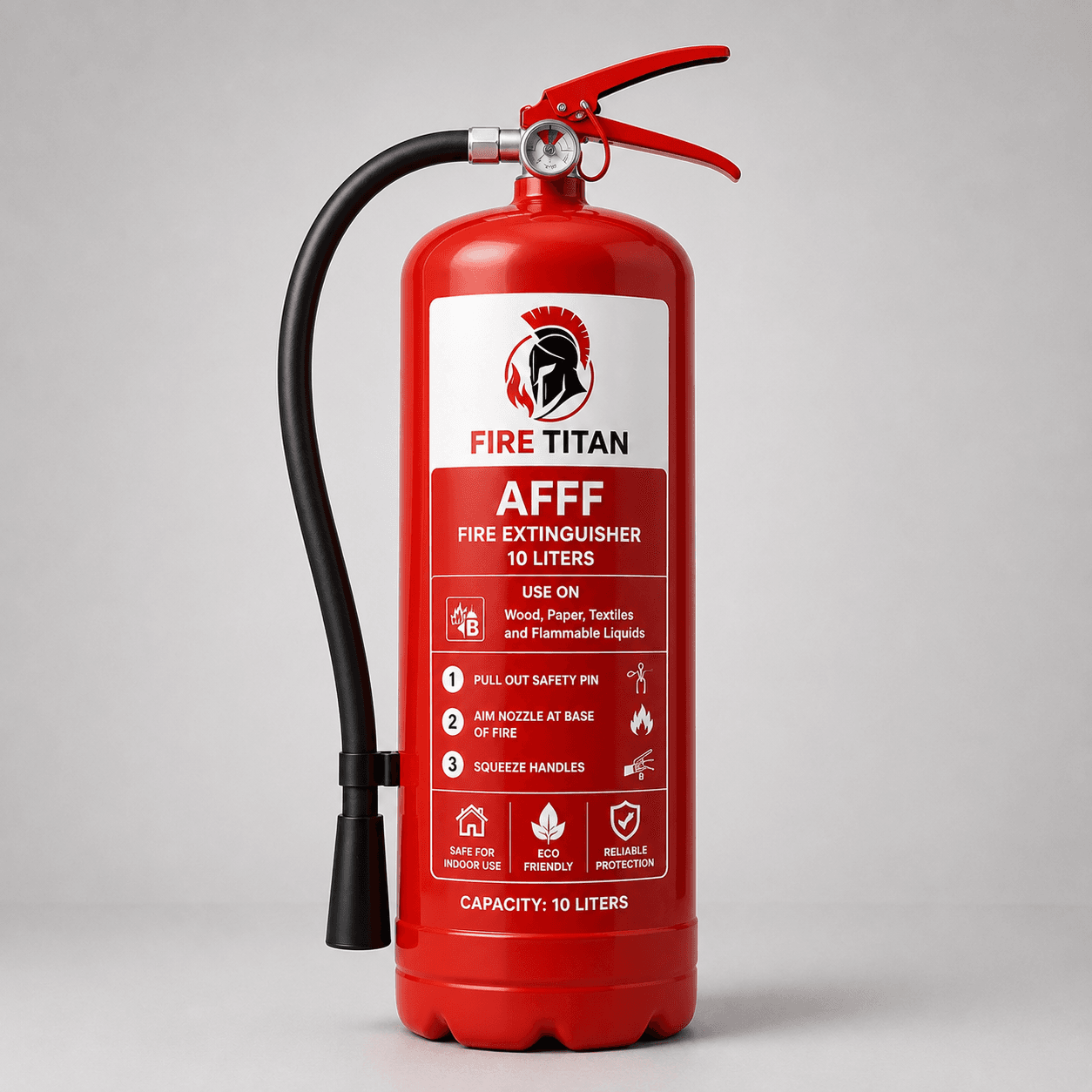
The Fire Titan 10-Litre AFFF Fire Extinguisher provides reliable first-response protection for premises containing ordinary combustible materials and flammable liquids.
AFFF stands for Aqueous Film-Forming Foam. When applied to a flammable-liquid fire, the foam creates a layer over the fuel surface that helps separate the flames from oxygen and reduces the release of flammable vapours. The water content also provides a cooling effect, making foam extinguishers useful for burning materials such as wood, paper, cloth and furniture.
Its 10-litre capacity makes it suitable for commercial and industrial environments where a larger quantity of extinguishing agent may be required. The extinguisher should be installed at a visible and accessible fire point selected according to the property’s fire-risk assessment.
The extinguisher is intended for small, early-stage fires. It should only be used when the alarm has been raised, the correct extinguisher is available and the operator has a clear escape route.
Key Features
- 10-litre foam capacity
- Aqueous film-forming foam extinguishing agent
- Suitable for Class A and Class B fire risks
- Cooling and smothering action
- Helps reduce flammable-liquid vapours
- Helps minimise the risk of reignition
- Controlled foam discharge
- Pressure gauge for visual inspection
- Safety pin and tamper seal
- Clearly displayed operating instructions
- Durable red cylinder
- Suitable for commercial and industrial premises
- Inspection, refilling and maintenance support available
Suitable Fire Risks
Class A Fires
The extinguisher may be suitable for ordinary combustible materials such as:
- Wood
- Paper
- Cardboard
- Textiles
- Fabrics
- Furniture
- Selected plastics
- Packaging materials
Foam extinguishers are recognised for Class A materials because their water content cools the burning fuel.
Class B Fires
An appropriately rated AFFF extinguisher may also be used on flammable-liquid fires involving:
- Petrol
- Diesel
- Paint
- Solvents
- Certain oils
- Industrial liquids
- Fuel spills
- Flammable-liquid storage risks
AFFF foam spreads across the liquid surface, helping suppress vapours and isolate the fuel from oxygen.
Recommended Applications
The Fire Titan 10-Litre AFFF Fire Extinguisher is suitable for locations such as:
- Warehouses
- Workshops
- Factories
- Offices
- Commercial buildings
- Fuel-storage areas
- Petrol-related facilities
- Vehicle maintenance centres
- Garages
- Paint-storage areas
- Construction sites
- Shopping centres
- Hotels
- Educational institutions
- Industrial facilities
Foam extinguishers are commonly positioned near exits in areas identified as having Class A or Class B fire risks.
How the AFFF Extinguisher Works
The extinguisher controls fire through three main actions:
Cooling
The water content absorbs heat from the burning material and lowers its temperature.
Smothering
The foam forms a blanket over the burning surface, helping separate the fuel from oxygen.
Vapour Suppression
On flammable-liquid fires, the film helps reduce the release of combustible vapours and lowers the possibility of the flames returning.
Important Usage Limitations
Do Not Use On
Unless the actual product label and certification state otherwise, do not use this extinguisher on:
- Live electrical equipment
- Electrical panels that remain energised
- Cooking oils and deep-fat fryer fires
- Flammable-gas fires
- Combustible metals
- Water-reactive chemicals
- Large or rapidly spreading fires
- Fires where heat or smoke blocks the escape route
Foam extinguishers are not generally recommended for fires involving live electricity because the water-based extinguishing agent may create an electrical hazard.
A wet chemical extinguisher should normally be selected for cooking oils and fats.
How to Use the AFFF Fire Extinguisher
Only attempt to use the extinguisher when:
- The alarm has been raised.
- The fire is small and contained.
- The extinguisher is suitable for the fuel involved.
- You have a clear escape route.
- The smoke and heat are not creating immediate danger.
Operating Steps
1. Pull the Safety Pin
Remove the safety pin and break the tamper seal.
2. Aim the Nozzle
Aim the nozzle carefully toward the fire.
For a solid-material fire, direct the foam toward the base of the flames.
For a flammable-liquid fire, avoid directing a powerful stream straight into the liquid because this may splash and spread the burning fuel.
3. Squeeze the Handle
Press the operating handles together to release the foam.
4. Apply the Foam Gently
For liquid fires, direct the foam toward a nearby vertical surface or the far edge of the fire so that it flows gently across the fuel.
5. Cover the Burning Area
Continue applying foam until the complete liquid surface is covered and the flames are extinguished.
Evacuate immediately when the fire grows, the extinguisher becomes empty or the escape route is no longer safe.
Product Specifications
| Specification | Details |
|---|---|
| Product name | AFFF Fire Extinguisher |
| Product type | Foam Fire Extinguisher |
| Brand | Fire Titan |
| Capacity | 10 Litres |
| Extinguishing agent | Aqueous film-forming foam |
| Typical fire classes | Class A and Class B |
| Suitable materials | Solids and selected flammable liquids |
| Cylinder colour | Red |
| Identification colour | Cream foam label section |
| Operating type | Portable and manually operated |
| Discharge system | Hose and nozzle |
| Installation | Wall bracket or designated fire point |
| Usage | Commercial and industrial premises |
| Inspection | Professional inspection recommended |
| Refilling | Required after partial or complete discharge |
Specifications to Confirm Before Publishing
The following details should be taken from the actual manufacturer or supplier datasheet:
- Exact fire rating
- Foam concentration
- Fluorine or PFAS status
- Working pressure
- Test pressure
- Discharge duration
- Discharge range
- Operating temperature
- Filled weight
- Cylinder dimensions
- Cylinder material
- Valve material
- Manufacturing standard
- Certification or approval
- Warranty period
Do not publish estimated technical values because they may differ between manufacturers and models.
Environmental and Compliance Note
Traditional AFFF products may contain fluorinated chemicals, including certain PFAS substances. Regulations concerning these chemicals are changing in several markets; for example, the United Kingdom restricted firefighting foams containing PFOA from July 2025.
Before purchasing, importing or supplying the product, confirm:
- Whether the foam is fluorine-free or contains PFAS
- The chemical formulation
- The product’s safety data sheet
- Applicable Pakistani environmental requirements
- Disposal and refilling procedures
For stronger future-proof positioning, the client may consider offering a fluorine-free foam extinguisher alongside or instead of traditional AFFF where suitable certified products are available.
Maintenance and Inspection
To keep the extinguisher ready for use:
- Keep it visible and unobstructed.
- Confirm that the safety pin and seal remain intact.
- Check that the pressure gauge is within the operating range.
- Inspect the cylinder for dents, corrosion or leakage.
- Check the hose and nozzle for blockage or damage.
- Ensure the instructions remain readable.
- Arrange scheduled inspection by a qualified technician.
- Refill or replace the extinguisher after any discharge.
- Follow the manufacturer’s servicing and disposal instructions.
Foam extinguishers require periodic inspection and maintenance, with servicing intervals determined by the applicable standard and manufacturer instructions.
Why Choose Fire Titan?
- Reliable foam fire-protection equipment
- Professional extinguisher-selection guidance
- Supply and installation support
- Inspection and routine maintenance
- Fire-extinguisher refilling services
- Commercial and industrial fire-safety solutions
- Support with product placement
- Competitive quotations across Pakistan
Frequently Asked Questions
What does AFFF mean?
AFFF stands for Aqueous Film-Forming Foam. It is a foam-based extinguishing agent designed to create a protective film over certain flammable-liquid fires.
What fires can an AFFF extinguisher be used on?
It is commonly designed for Class A fires involving materials such as wood, paper and textiles, and Class B fires involving selected flammable liquids.
Can it be used on an electrical fire?
A standard foam extinguisher should not be used on live electrical equipment unless the product is specifically tested, marked and approved for that application.
Can it be used on cooking-oil fires?
No. A wet chemical extinguisher is the appropriate specialist option for high-temperature cooking oils and fats.
Is a 10-litre extinguisher suitable for a warehouse?
It can be suitable where the fire-risk assessment identifies Class A and Class B hazards. The required number, rating and positioning should be determined professionally.
Does foam leave residue?
Yes. Foam leaves a water-based residue that requires cleaning after discharge.
Does it require refilling after use?
Yes. Any partly or completely discharged extinguisher should be removed from service and professionally refilled or replaced.
What is the difference between AFFF and dry powder?
AFFF is a foam-based agent mainly intended for Class A and B risks. Dry powder is more versatile across several fire classes but can reduce visibility and leave widespread powder residue.





Reviews
There are no reviews yet.